The shower valve is the one piece of plumbing in a bathroom that is buried in the wall, which is why it gets ignored until it fails outright. When it does, the symptoms are easy to misread as something cheaper. This post explains what the valve does, how to tell when it is the problem, and what replacing it actually involves in the kind of houses we work on around Newnan.
What the valve does
Behind the handle is a valve body, soldered or crimped to the hot and cold supply lines, with outlets going up to the shower head and, on a tub, down to the spout. Inside the body sits a cartridge that mixes hot and cold and controls flow.
Modern residential valves are pressure-balancing or thermostatic. A pressure-balancing valve keeps the temperature steady when someone flushes a toilet or the washer kicks on. A thermostatic valve holds a set temperature regardless of supply pressure. Older homes, including plenty in the historic parts of Newnan, still have plain two- or three-handle valves with no protection at all, which is how a flushed toilet becomes a scald.
Symptoms that point at the valve
- Temperature drifts or swings hard when other fixtures run.
- Drip from the shower head with the handle fully off. The cartridge is not sealing.
- Handle is stiff, loose, or spins past its stops. Worn cartridge or a broken stem.
- Water comes out of both the spout and the head at once on a tub-shower. The diverter is failing.
- Reduced flow at the shower but full flow at the sink. Scale in the cartridge or the valve inlets.
- Wet drywall on the far side of the shower wall, or a stain on the ceiling below. A leaking valve body or connection.
The first four are usually a cartridge. The last one is a valve or pipe repair, and it needs attention the same week, not the same season.
Cartridge first, valve second
If the valve is from a major brand and the body is sound, a new cartridge fixes most of the list above and the tile stays untouched. That is the outcome we aim for, because it is the cheapest and the least disruptive.
The valve itself gets replaced when the body is leaking, when it is an obsolete brand with no parts, when the cartridge is seized so badly the body cracks on removal, or when you are changing from a two- or three-handle setup to a single-handle pressure-balancing valve during a bathroom remodel.
What replacement looks like
- 1Shut the main, drain the lines, and open the wall on the access side or remove the trim plate on the shower side.
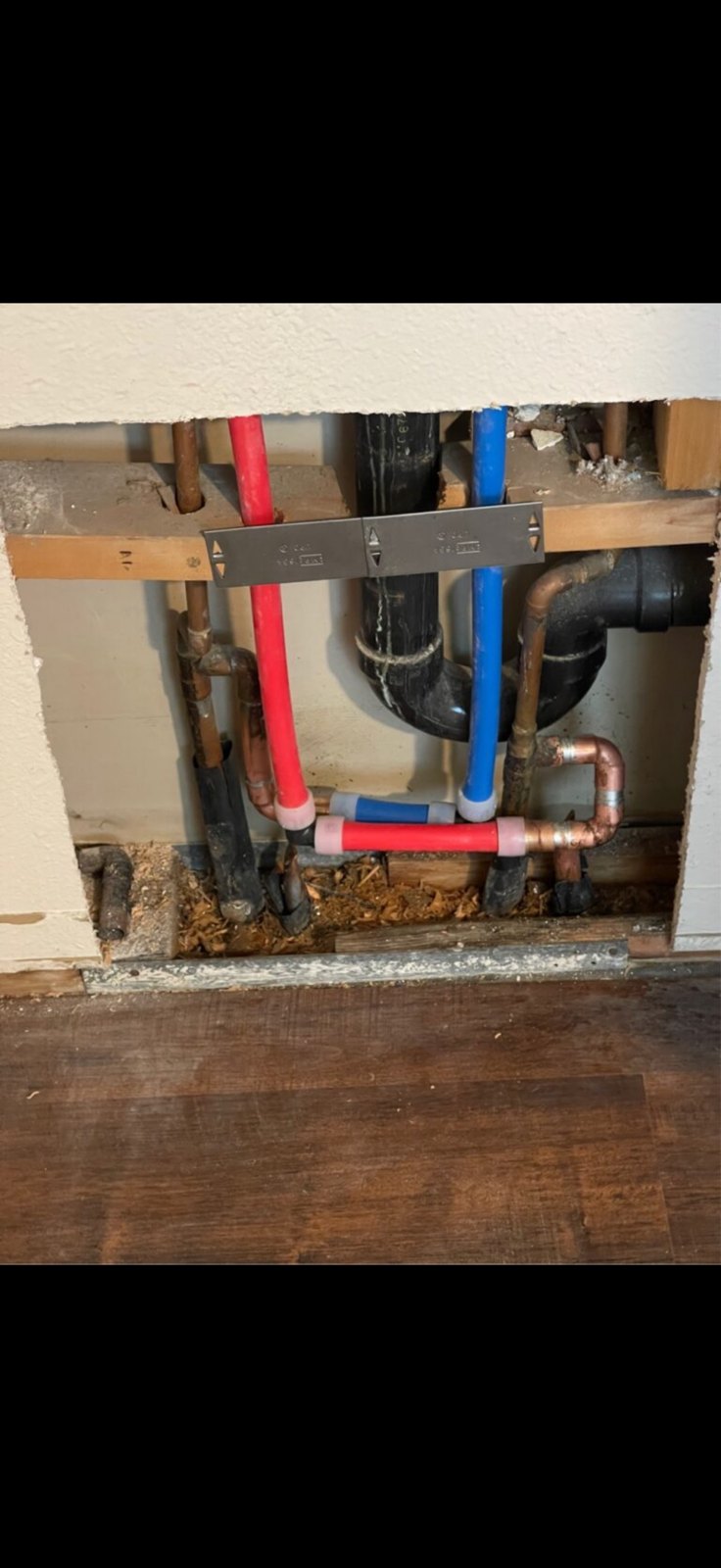
- 2Cut out the old valve body and check the condition of the supply lines. Old galvanised or brittle copper often gets replaced back to a sound point while the wall is open.
- 3Set the new valve at the correct depth for the finished wall. Getting this wrong is the most common DIY mistake and it means the trim never sits flush.
- 4Connect supplies, the shower riser and the tub spout drop. Pressure test before the wall is closed.
- 5Patch, prime and paint the access opening, or fit the trim plate and caulk it.
Most single-valve swaps with side access are done in a day. Add time if the supplies need rerouting or if the wall opening turns up other problems, which in older houses it sometimes does.
Questions we get
Can I replace just the handle to change the look?
Trim kits change the handle, plate and head without touching the valve, but only within the same brand and valve family. A different brand of trim means a different valve.
Why does the valve have to be a certain depth?
The trim plate and handle are designed for a narrow range of distances between the valve and the finished wall surface. Set too deep and the handle will not reach; set too shallow and the plate stands proud. Manufacturers include a plaster guard that shows the range.
Is a scald-protected valve required?
Current code requires pressure-balancing or thermostatic valves in new showers and remodels. If you are opening the wall anyway, upgrading is the sensible move for any house with children or older adults. It is also one of the recommendations in our aging in place guide.
Talk to us before you open the tile
Wright Way Services handles shower valve and cartridge work across Newnan, Coweta County and Fayette County, including the drywall patch afterward. Call (770) 301-4638 for plumbing service.
Open 24 hours · Newnan, GA
Want a hand with this one?
Wright Way Services handles it all in one call — plumbing, remodeling, smart home installs and the whole punch list. Serving Newnan, Coweta County and the surrounding area.