Skipping a permit feels like a shortcut. No paperwork, no waiting on an inspector, no fee. The contractor says he does it all the time. And for a while, nothing happens.
Then you sell the house. Or you file a claim. Or a neighbor calls the county. The shortcut turns out to have been a loan taken out in your name, at a terrible rate.
First: find out who has jurisdiction over your address
This trips people up constantly and it matters more than anything else here. A Newnan mailing address does not mean you're inside the Newnan city limits. Plenty of homes on this side of metro Atlanta get mail addressed to Newnan while sitting in unincorporated Coweta County. Sharpsburg, Senoia, Peachtree City, and Tyrone each have their own situations.
Whoever has jurisdiction over your parcel issues the permit, sets the fees, and sends the inspector. Their rules are not identical to the jurisdiction next door, and rules change. So we're not going to quote you a fee, a deck height, or a square-footage cutoff in this article — whatever we wrote today could be wrong for your address tomorrow. Call the building department that covers your parcel and ask. They'll tell you for free whether your project needs a permit. Cheapest insurance in home improvement.
What generally requires a permit
The pattern is consistent almost everywhere, even when the details differ. If the work touches structure, systems, or the building envelope, it usually needs a permit:
- Structural changes, including altering or removing a load-bearing wall — even if somebody swears it isn't load-bearing.
- Additions of conditioned square footage.
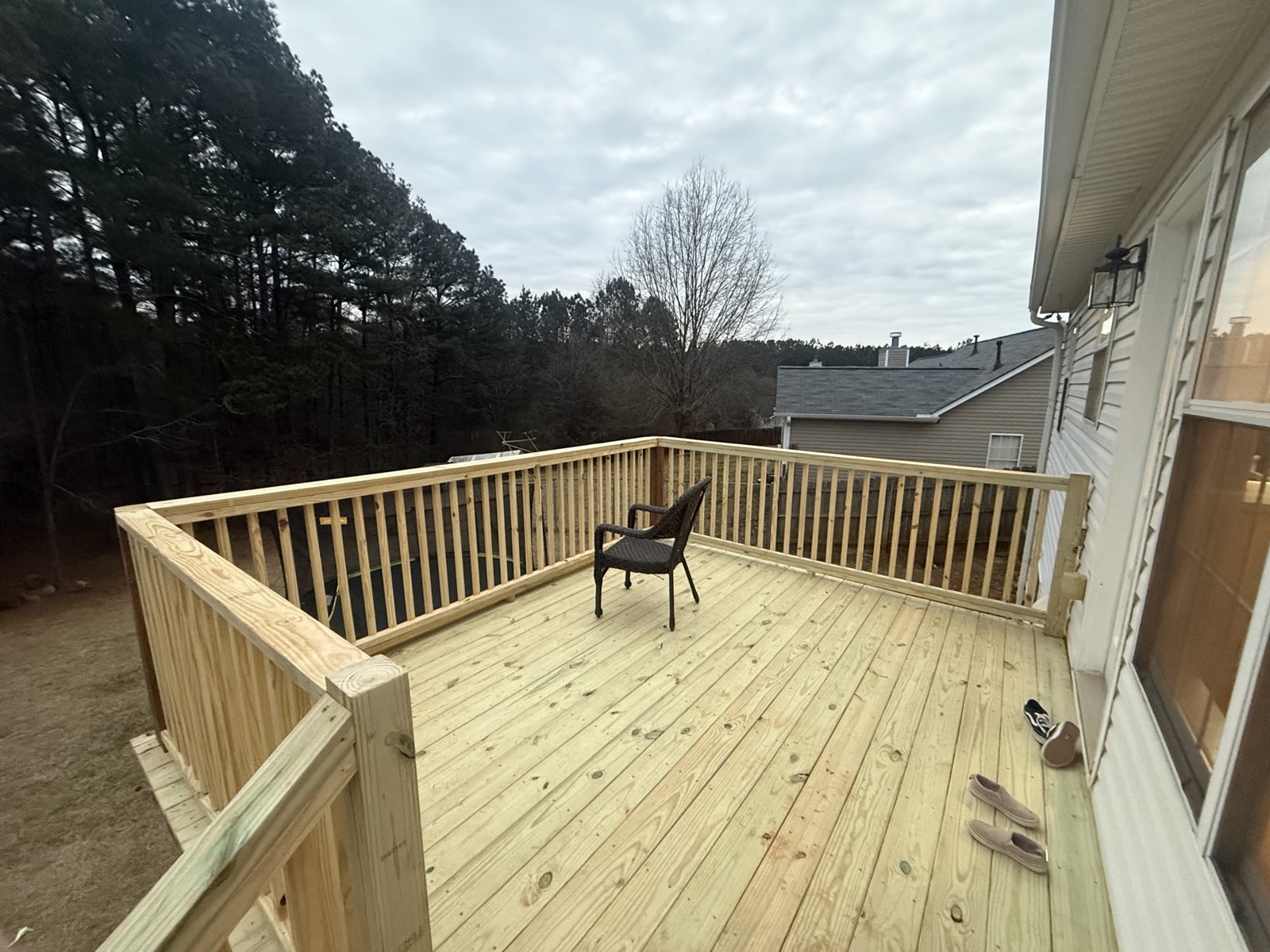
- Decks, porches, and covered structures. Nearly always; details vary by jurisdiction.
- New or relocated plumbing, including moving a drain or running new supply.
- Electrical work — new circuits, panel work, service upgrades, relocated outlets.
- Gas lines — new runs, relocations, appliance connections.
- HVAC replacement or new ductwork.
- Water heater replacement, in many jurisdictions. Yes, really. Ask.
- Converting unfinished space to living space — basements, attics, garages, bonus rooms.
- New window or door openings, because you're cutting the structure.
- Roofing, in some jurisdictions.
- Pools, and sheds or accessory structures above a certain size.
What generally doesn't
- Painting, inside and out.
- Flooring over an existing subfloor — carpet, LVP, hardwood, tile.
- Cabinet replacement in the same footprint with nothing relocated.
- Fixture-for-fixture swaps: faucet for faucet, light for light, toilet for toilet in the same spot.
- Minor drywall repair and patching.
- Trim, doors in existing openings, hardware, and general cosmetic work.
Notice the line. The moment a cabinet job moves the sink, or the light swap becomes a new circuit, you've crossed it. That boundary is the thing to watch for.
The four real costs of skipping it
1. Safety — the inspection is the point
People treat the inspector as a bureaucrat. He isn't. He's a second set of eyes on the parts of your house that can burn it down or rot it out. He's the one who catches the double-tapped breaker, the undersized header, the missing waterproofing behind the shower, the joist somebody notched halfway through to run a pipe. Those failures are invisible the day they're built and expensive every day after.
2. Resale — it surfaces, and it costs you leverage
Unpermitted work shows up. In your seller's disclosure, where you either lie or tell the truth and both are bad. In the buyer's inspection. In the county records showing a three-bedroom when your listing says four. The moment it surfaces you're negotiating from your back foot: some buyers renegotiate, some demand you legalize it before closing (which means opening the work back up), and some just walk — and the ones who walk tend to be the good buyers who have other options.
3. Insurance — the claim can get denied
If a loss traces back to unpermitted work — a fire starting at an unpermitted circuit, water damage from an unpermitted plumbing run — your carrier has grounds to dispute or deny the claim. You saved a permit fee and put the whole house on the table. Ask your own insurance agent how your policy treats it. Don't take our word for it, and don't take your contractor's.
4. Enforcement — and the wall you have to open
Get caught mid-project and you can eat a stop-work order: everything stops cold while you sort out paperwork you should have had. Get caught after, and here's the one that hurts — the jurisdiction can require you to expose finished work for inspection. Demo the drywall you just painted so somebody can look behind it. It is the most expensive possible way to find out whether the work was done right.
The bonus cost nobody mentions
You finished the basement. Two bedrooms, a bath, a family room, no permit, because it was "just interior." When you sell, an appraiser generally can't count unpermitted finished square footage toward the value of the home — it isn't legal living area on the record. So you paid for the whole project and got a basement you can enjoy but can't get credit for. That's the quiet one. It doesn't blow up. It just deletes a large chunk of the money you spent.
Who pulls the permit — and why it shouldn't be you
Many jurisdictions let a homeowner pull a permit on their own residence. It sounds convenient. It's a trap. A homeowner permit puts your name on the work and makes you the responsible party for its code compliance. If a contractor asks you to pull it yourself, understand what's happening: liability is moving off their business and onto you, in your house. Sometimes it's because they can't pull it — no license, no insurance, something in their history. Whatever the reason, the answer is the same. The contractor doing the work pulls the permit. Their name, their license, their inspections to pass.
We handle the permits
It's part of the job. We find out who has jurisdiction over your address, pull the permit in our name, schedule the inspections, and make the work pass. You chase none of it. Planning something in Newnan or anywhere in Coweta County and not sure what it needs? Call (770) 301-4638 and describe it. We'll tell you straight, even when the answer is that you don't need us for it.
Open 24 hours · Newnan, GA
Want a hand with this one?
Wright Way Services handles it all in one call — plumbing, remodeling, smart home installs and the whole punch list. Serving Newnan, Coweta County and the surrounding area.