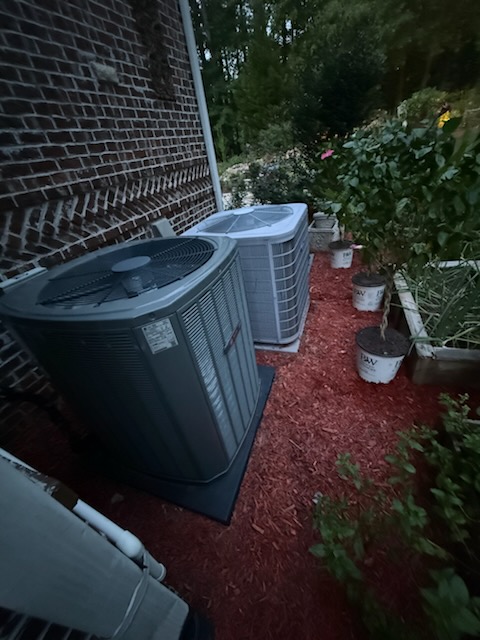
A Georgia air conditioner runs harder and longer than one almost anywhere else in the country. It is also the most expensive system in the house to replace, and the difference between a system that lasts ten years and one that lasts eighteen is almost entirely maintenance.
The filter
The single highest-value thing you can do, and the thing most often neglected.
- Check monthly, replace every one to three months. Homes with pets, allergies, or heavy pollen exposure need the short end of that.
- Get the size right and write it somewhere you will find it. Every homeowner forgets the filter size.
- Do not over-filter. A very high MERV filter restricts airflow in a system not designed for it, which reduces efficiency and can freeze the coil. Mid-range is the right answer for most residential systems.
- Note the airflow arrow and point it toward the unit.
A clogged filter restricts airflow, which makes the system work harder, run longer, cool worse and eventually freeze up. It is a few dollars preventing a service call.
The outdoor unit
- Keep two feet of clearance on all sides and several feet above. Shrubs, fence panels and stacked yard items all choke it.
- Rinse the fins with a garden hose from the inside out, gently, with the power off at the disconnect. Georgia pollen and cottonwood mat the coil and it is a major efficiency loss.
- Straighten bent fins carefully with a fin comb if hail or a weed trimmer got them.
- Keep grass clippings off it. Blow clippings away from the unit, not into it.
- Check it is level. A settled pad stresses the refrigerant lines and the compressor.
- Do not cover it in winter except loosely on top. A fully wrapped unit traps moisture and attracts rodents.
The condensate drain
This one causes more emergency calls than anything else on the list, and it is entirely preventable.
Air conditioning pulls a great deal of water out of Georgia air. That water leaves through a condensate line, and the line grows algae and sludge until it clogs. Then the pan overflows — into the ceiling if the air handler is in the attic, which it usually is here.
- Find the drain line and the cleanout.
- Pour a cup of distilled vinegar into the cleanout monthly during cooling season. This is the whole maintenance routine and it takes a minute.
- Check the outdoor discharge point is dripping during operation. If it is not, the line is likely blocked.
- Confirm the safety float switch works. It shuts the system down before the pan overflows, and it is the difference between an inconvenience and a ceiling repair.
Vents and returns
- Do not close vents in unused rooms. Modern systems are balanced for the whole house and closing vents raises static pressure, which strains the blower and can cause coil problems.
- Keep furniture and rugs off supply and return vents.
- Vacuum the registers occasionally.
- Check the return is not restricted — a blocked return starves the whole system.
The annual service
Twice a year is ideal — cooling in spring, heating in fall. At minimum, once before summer.
What a proper service covers:
- Refrigerant charge checked against manufacturer spec
- Coils cleaned, indoor and outdoor
- Electrical connections tightened and contactors inspected
- Capacitor tested — a weak capacitor is the most common cause of a summer failure and it is cheap to replace before it fails
- Blower cleaned and airflow checked
- Condensate drain cleared and float switch tested
- Thermostat calibration
- Heat exchanger inspection on gas furnaces — a safety item, not an efficiency one
Keep the receipts. Manufacturer warranties and home warranties both require documented maintenance, and a denied claim over a missing service record is a genuinely common story.
Warning signs to act on
- Ice on the refrigerant line or the coil. Turn the system off and let it thaw — running it frozen damages the compressor. Cause is usually low airflow or low refrigerant.
- Water around the air handler. Condensate problem, addressed above.
- Short cycling — turning on and off rapidly.
- Rising power bills with no change in usage.
- Rooms that never reach temperature.
- New noises — grinding, squealing, or a hard click at startup.
- A burning smell beyond the first heating cycle of the season.
Thermostat habits that help
- Do not set it drastically lower expecting faster cooling. It cools at one rate; a lower setpoint just makes it run longer.
- A programmable or smart thermostat genuinely saves money in a Georgia summer. See our smart thermostat guide.
- Use ceiling fans — they cool people, not rooms, and they let you hold a higher setpoint comfortably. Turn them off in empty rooms.
- Keep blinds closed on west-facing windows in the afternoon.
Get it serviced
Wright Way Services handles HVAC-adjacent home repair, ductwork, attic work and the general maintenance list across Newnan, Peachtree City, Sharpsburg, Senoia and Fayette County. Call (770) 301-4638.
Open 24 hours · Newnan, GA
Want a hand with this one?
Wright Way Services handles it all in one call — plumbing, remodeling, smart home installs and the whole punch list. Serving Newnan, Coweta County and the surrounding area.