Nobody gets burned by a contractor on the day they sign. They get burned three weeks later, when the crew stops showing up, the deposit is gone, and the guy who answered his phone every day suddenly doesn't. By then your options are bad and expensive.
Everything below is a check you make before money changes hands. It costs you an afternoon. And here's the part worth saying out loud: a legitimate contractor will not flinch at a single item on this list. We hand this stuff over without being asked. If somebody gets irritated that you're asking, that reaction is your answer.
Verify insurance the right way, not the usual way
Most homeowners ask "are you insured?", hear "yes," and stop. Some ask for proof and accept a PDF that lands in their inbox. A PDF is a picture. Pictures get edited, and policies get canceled for non-payment while the paperwork still looks fine.
Do it the real way: ask for the certificate of insurance with the agent's or carrier's contact information on it, then call that agent and confirm the policy is active today. Five minutes, and it's the highest-value thing on this page. You're confirming two coverages that do two different jobs.
- General liability. Covers damage the contractor does to your property. Somebody puts a sawzall through a supply line and your ceiling comes down. This is what pays for that.
- Workers' compensation. Covers the crew if somebody gets hurt on your job. This is the one people skip and the one that can hurt you most. If an uninsured worker falls off a ladder in your yard, there's a real chance that injury gets pointed at your homeowner's policy and at you. Ask your own agent what your exposure is.
Check the license with the board, not with the contractor
Licensing requirements differ by trade and by scope, and they change over time. A drywall patch and an electrical panel are not the same conversation. Don't take our word for what applies to your project, and don't take the contractor's either.
Look up the state licensing board that governs the trade, search the business name and the license number they gave you, and confirm three things: the license exists, it is active and in good standing, and the name on it matches the name on your contract. A license in a cousin's name, or one that expired two years ago, is not a license. If they tell you no license is needed, that may well be true — plenty of work doesn't require one — but get it in writing on the estimate and confirm it with the state or the building department yourself.
The paper trail: what a real contract contains
A handshake is not a contract, and neither is a number texted to you. What you sign should be detailed enough that a stranger could read it and know exactly what is supposed to happen. At minimum:
- 1Scope of work in specific language — what is being done, and what is not.
- 2Materials spec with brands, models, and grades. Not "tile." Which tile.
- 3Schedule — a start date, a rough sequence, and a target completion.
- 4Payment terms tied to progress milestones, not to dates on a calendar.
- 5Change-order process — how changes get priced and approved in writing before the work happens.
- 6Warranty on workmanship, in writing, separate from any manufacturer warranty on materials.
Payment red flags
How a contractor wants to be paid tells you how they run a business. These should stop you cold:
- A large cash deposit up front. A deposit is normal. An outsized one, in cash, before anything is ordered or scheduled, is a funding request.
- "Pay me and I'll go get the materials." Established contractors have accounts at their suppliers. They don't need your cash to buy plywood.
- Full payment before completion. Once they're paid in full, the incentive to finish your punch list is gone.
- A discount for cash with no invoice. No paper means no proof you paid, no warranty you can enforce, and no recourse. That's the most expensive money you'll ever save.
Reference checks that actually tell you something
Asking references "were you happy?" is theater. Nobody hands out the number of a customer who hated them. Ask for recent, local jobs — work finished in the last year, here in Coweta County, not a showpiece from six years ago two counties over. Then go look at one. If it's a deck or an exterior, you can see it from the street.
And when you get that homeowner on the phone, ask questions that produce real information:
- "What went wrong, and how did they handle it?" Something always goes wrong. This answer is the whole evaluation. A contractor who owns a mistake and fixes it is the one you want.
- "Did the final price match the contract? If not, why?"
- "Did they show up when they said they would, and how was the site left each day?"
- "Would you hire them again for something bigger?"
Look for a real footprint
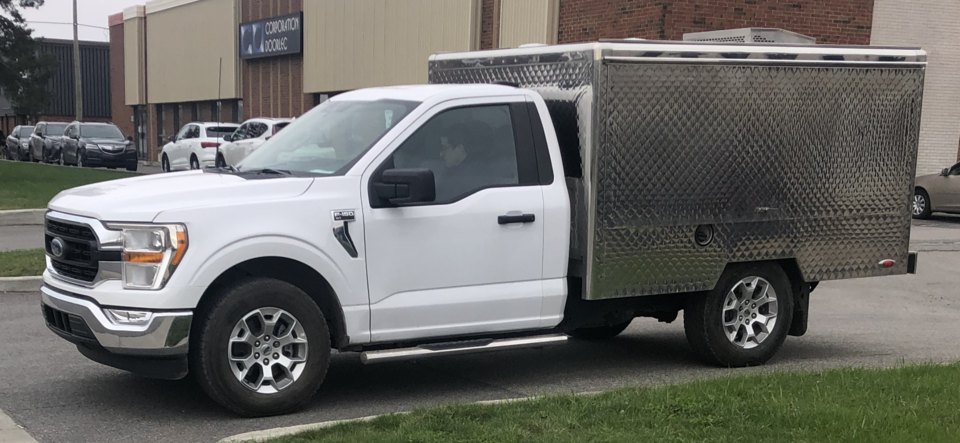
Legitimate contractors leave evidence that they exist: a business address you can find, trucks with the company name on them, a phone a human being answers, a review history that accumulated over years instead of appearing in one week, and a business entity you can look up in state records. Storm-chasers are built to do the opposite — which brings us to the list.
Red flags, in no particular order
- Door-knocking after a storm. Wind comes through Newnan or Sharpsburg and suddenly there are out-of-state plates in every driveway. Some are fine. Many are gone by spring, along with your deposit and your warranty.
- "This price is only good today." Real contractors are booked out. They don't need to close you in your driveway.
- An estimate scribbled on the back of a business card. If they won't write down the scope, they can't be held to it.
- "You don't need a permit for that." Sometimes true. Verify it with the building department yourself.
- Subcontractors you never heard about. Ask who is actually doing the work and whether they carry their own insurance.
Lien waivers: the thing nobody tells homeowners
Here's the one that catches careful people. If your general contractor doesn't pay the tile supplier or the electrical sub, those unpaid parties can place a lien against your house — even though you paid the general in full, on time, exactly as agreed. You can end up paying twice for the same work and finding out years later when you try to sell.
The protection is a lien waiver: a signed document from the contractor, and where appropriate from their subs and suppliers, confirming they've been paid and are releasing their right to lien your property for that work. Exchange waivers as you make payments, not at the end. Raise it at bid time, and on a large project ask a real estate attorney how it should be handled.
Put us through it
We would rather be hired by a homeowner who checked than one who guessed, because the ones who check end up happy. Run this list on Wright Way Services and on everyone else you're considering. Call (770) 301-4638 and ask for the certificate of insurance, the license information, a written scope, and references from recent jobs around Newnan. We'll have them to you before you hang up.
Open 24 hours · Newnan, GA
Want a hand with this one?
Wright Way Services handles it all in one call — plumbing, remodeling, smart home installs and the whole punch list. Serving Newnan, Coweta County and the surrounding area.