Almost every emergency call we run was preventable, and most were preventable by something that takes twenty minutes.
The ceiling stain in July is a clogged AC condensate line. The burst pipe in January is a garden hose nobody disconnected. The rotted deck board is three years of skipped sealing. These aren't acts of God. They're maintenance items that got postponed until they turned into repairs.
Georgia has its own list, because our climate is its own problem: brutal humid summers, a pollen season you can see from space, spring storms that come through hard, and just enough real freezing weather each winter to destroy plumbing that isn't ready for it. Here's the calendar.
Spring (March - May)
The busiest and most consequential maintenance season here. Everything below is about getting ahead of summer.
- Service the HVAC before the first hot week, not during it. The first 95-degree day arrives, ten thousand systems get switched to cool at once, and every HVAC company in Coweta County is booked for two weeks. Get serviced in March.
- Change your filters and set a recurring reminder. A choked filter makes the system run longer, work harder, and freeze the coil.
- Clear the condensate drain line. A clogged line is the number one cause of ceiling stains in Georgia summers. Your AC pulls gallons of water out of humid air every day. When the line clogs with algae, the pan overflows, and the first thing you know about it is a brown ring on the ceiling under the air handler.
- Pollen wash. Rinse the siding, windows, porch, and the outdoor condenser coil once the yellow stops falling. Pollen packed into a coil is insulation, which is the opposite of what a coil wants.
- Clean the gutters after the oaks and pines finish dropping. Clogged gutters dump water at the foundation.
- Inspect the roof and flashing after storm season — lifted shingles, damaged flashing at chimneys and valleys, granules in the gutters.
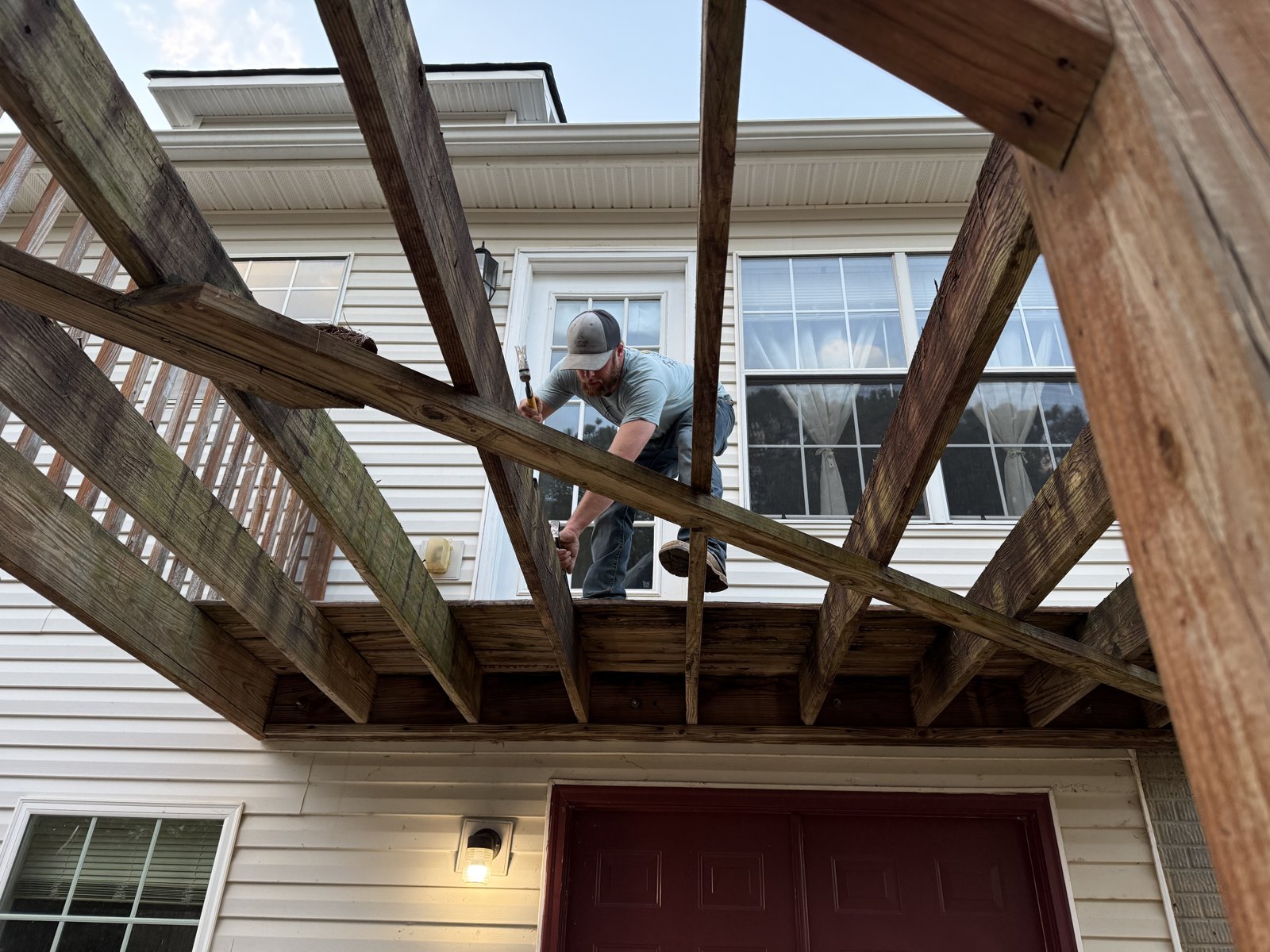
- Reseal the deck. Georgia sun and Georgia humidity take turns on exterior wood. Sealed boards last; unsealed boards cup, split, and rot.
- Test the irrigation — every zone, every head. Find the broken one now, not when the water bill arrives.
- Check exterior caulk and paint at windows, doors, and trim. Every gap is a water and bug entry point.
- Look at the crawlspace — vapor barrier intact, vents working, no standing water, no sagging insulation.
Summer (June - August)
Summer here is a war against water and humidity. Your AC is pulling moisture out of the air continuously, the crawlspace is a swamp, and the bugs are extremely awake.
- Check the AC drain pan and float switch. The float switch shuts the system down before the pan overflows. Confirm you have one and that it works.
- Watch humidity in the crawlspace and basement. If it smells musty, that's not a smell — it's a report. Musty means moisture, and moisture means rot.
- Service the dehumidifier — clean the reservoir, wash the filter, confirm the drain hose actually drains.
- Look for wood-destroying insect activity. Termites aren't theoretical in Georgia. Check sill plates, crawlspace posts, and any wood touching soil. Mud tubes on a foundation wall mean call somebody today.
- Flush the water heater to clear sediment off the bottom of the tank. Sediment insulates the tank from the burner and shortens its life.
- Test the sump pump — pour a bucket of water in the pit and confirm it kicks on, pumps out, and shuts off.
- Trim vegetation back off the house. Plants against siding hold moisture and bridge insects inside.
Fall (September - November)
Fall is the setup for winter. Everything here is cheap now and expensive in January.
- Have the heat checked before the first cold snap. Same logic as spring — the day it drops, everybody discovers their furnace at once. Do it in October.
- Chimney and dryer vent. Both are fire risks and both get ignored. A lint-packed dryer vent is one of the easiest house fires to prevent.
- Reverse the ceiling fans to clockwise on low. Pushes warm air off the ceiling back down where you are.
- Clean the gutters again after leaf drop. Different clean than the spring one, and skipping it is how you get foundation water.
- Weatherstripping and door sweeps. If you can see daylight around a door, you're heating Coweta County.
- Insulate exposed pipes — crawlspace, garage, exterior walls. Do it now in a sweater, not in January with a flashlight.
- Drain and disconnect the hoses, cover the spigots. A connected hose traps water in the bib; it freezes, expands, and the split can be inside your wall.
- Test every smoke and CO detector and change the batteries. All of them, same day, every fall.
Winter (December - February)
Georgia winters are mild until they aren't. We get a handful of genuine hard freezes a year, and the pipes that burst are always the ones nobody prepped — because nobody around here quite believes it's going to happen. Run this the day before an overnight freeze:
- 1Know where your main water shutoff is, and know that it turns. Find it today, while it isn't an emergency. If a pipe lets go and you're hunting for the valve, you're measuring damage in minutes.
- 2Drip the right faucets — the ones fed by pipes running through unheated space or exterior walls. A slow drip on hot and cold keeps water moving, and moving water is much harder to freeze.
- 3Open the cabinet doors under sinks on exterior walls so household heat reaches the supply lines.
- 4Close the crawlspace vents so wind isn't blowing across your pipes.
- 5Disconnect any hose you forgot in the fall. Go do it now, in the dark, in the cold. Better than the alternative.
- Watch for ice on walkways, steps, and north-facing surfaces that never see sun.
- Get up in the attic on a cold day. Look for frost, damp insulation, or daylight, and check whether your insulation is deep enough. Winter is when attic problems declare themselves.
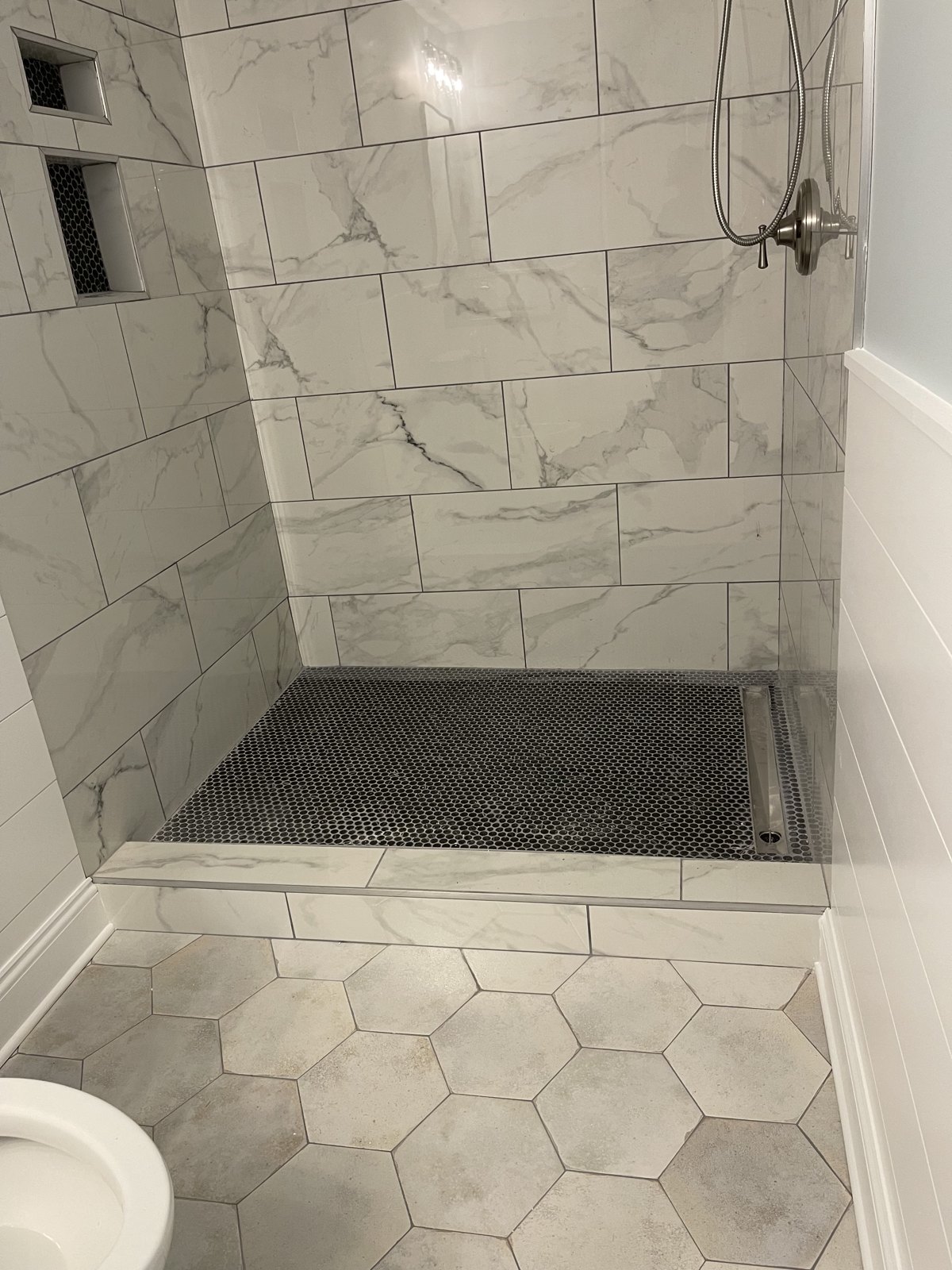
- Use the slow season. Winter is the right time to schedule interior remodeling — kitchens, baths, basements. You're stuck inside anyway, crews are more available, and you're not tearing the house apart during the summer you wanted to enjoy it.
Monthly and quarterly
- HVAC filters — check monthly, change on the manufacturer's schedule. Sooner with pets.
- Test the GFCI outlets — press test, confirm it trips, press reset. Kitchen, baths, garage, exterior. They fail silently.
- Run the garbage disposal with cold water and ice; wipe the splash guard.
- Check the water softener salt if you have a system.
- Change the batteries in leak sensors. A dead leak sensor is a decoration.
- Walk the perimeter. Once around, every month. Grade, downspout extensions, foundation, siding, caulk, crawlspace door. You'll catch things while they're still a Saturday instead of a claim.
Let us take the list off your hands
Most of this you can do yourself, and you should. The rest — HVAC service, gutters at height, the crawlspace, pipe insulation, caulking, deck sealing — is exactly what our crew knocks out in a visit. Book seasonal maintenance with Wright Way Services at (770) 301-4638 and we'll work the list for your house, whether you're in Newnan, Sharpsburg, or anywhere else on the south side of metro Atlanta.
Open 24 hours · Newnan, GA
Want a hand with this one?
Wright Way Services handles it all in one call — plumbing, remodeling, smart home installs and the whole punch list. Serving Newnan, Coweta County and the surrounding area.