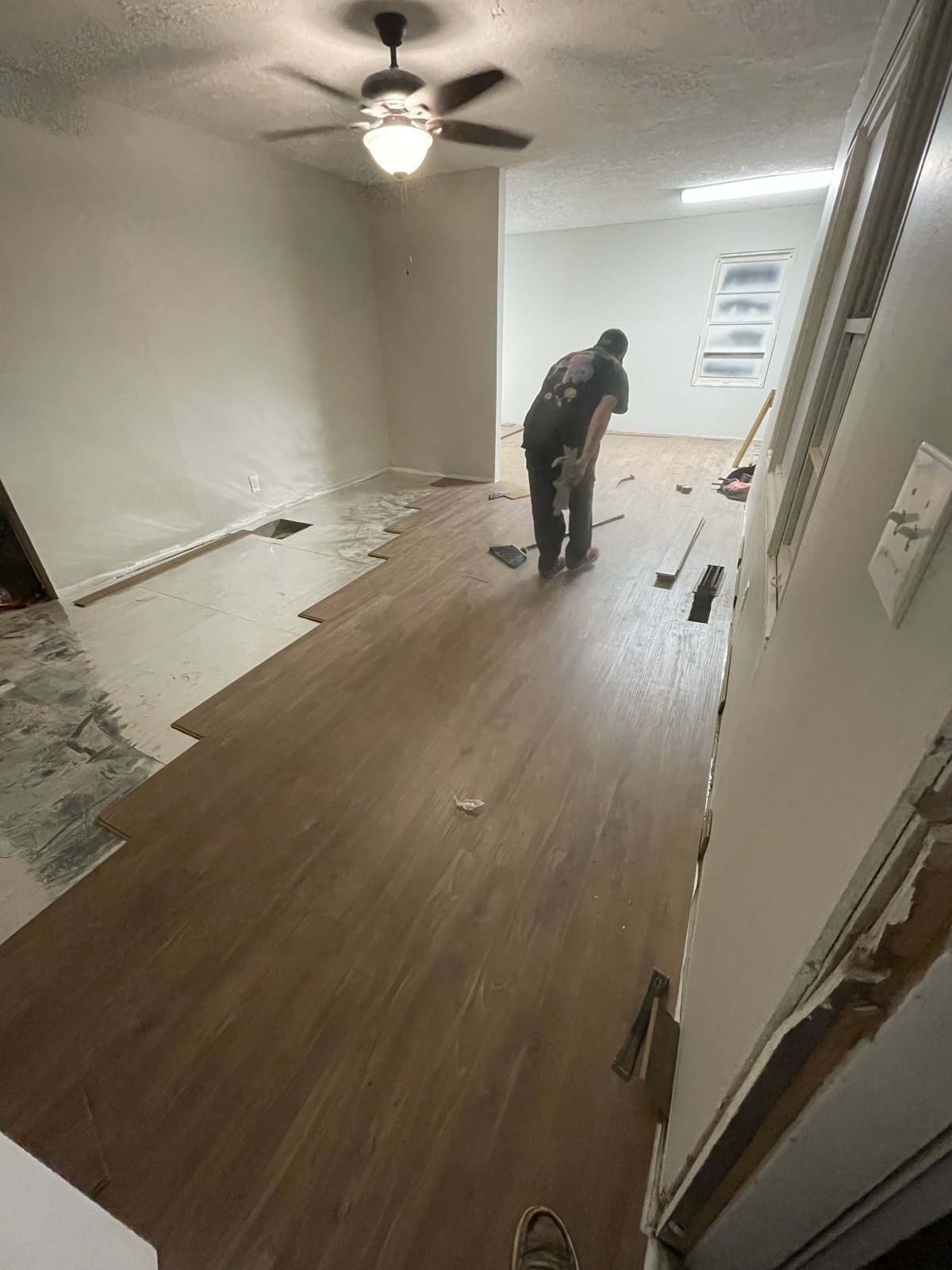
Flooring is the biggest visual surface in your house and the one that takes the most abuse, and most people pick it by walking a showroom and looking at samples under fluorescent light. That is how you end up with solid oak buckling in a slab-on-grade den, or a bargain vinyl plank that shows every dent from a dining chair.
Georgia narrows the field for you, whether you want it to or not. Four things drive the decision here, and they are all local.
The four Georgia factors
- Summer humidity. Wood is hygroscopic. It takes on moisture from the air and gives it back, and it changes dimension when it does. Our summers are long and wet, our winters are dry, and that swing is what makes boards cup, gap and squeak.
- Slab-on-grade construction. A large share of homes around Newnan, Sharpsburg and Tyrone sit on a concrete slab with no crawlspace under the main floor. Concrete holds and passes moisture. That single fact rules out or seriously complicates solid hardwood on the ground floor unless you build a subfloor system on top of the slab, which costs money and eats ceiling height.
- Red clay. It comes in on shoes and paws, it is abrasive, and it stains. Grit is what actually wears out a floor finish. A dark, matte, textured floor forgives Georgia clay. A glossy light floor advertises it.
- Pets and kids. Claws, water bowls, accidents, dropped dishes. Be honest with yourself about this before you fall in love with a soft wood.
Material by material, with the real trade-offs
Solid hardwood
Still the most beautiful floor there is, and the only one that can be sanded and refinished repeatedly over decades. It also moves with humidity, needs to acclimate in the house for days before installation, and does not belong below grade or directly on a slab. If you have a proper wood subfloor upstairs and you control the humidity, solid hardwood is a genuinely great answer. If you are on a slab, this is the wrong tool.
Engineered hardwood
A real wood wear layer over a plywood or HDF core. The cross-laid core makes it far more dimensionally stable than solid wood, which is exactly what our climate wants, and it can go over concrete with the right underlayment or adhesive. The spec that matters is the wear layer thickness. A thick wear layer can be sanded and refinished at least once, maybe twice. A paper-thin one cannot be refinished at all, which means it is a wood-look disposable floor at a hardwood price. Ask for the wear layer number before you ask for anything else.
LVP (luxury vinyl plank)
The reason it dominates right now is simple: it is genuinely waterproof, it takes claws and clay and spilled juice, and the good stuff looks convincing. But the quality range is enormous and the price tag does not always tell you where you are on it.
- Check the wear layer in mils. This is the clear top coat. Thin wear layers scratch through and there is no fixing it. This is the single number that separates a floor that lasts fifteen years from one that looks tired in three.
- Cheap LVP telegraphs the subfloor. It is thin and flexible. Every bump, every high spot, every trowel ridge in the slab shows through and you feel it underfoot.
- It dents. Heavy furniture legs, especially on a thin plank over a foam pad, leave impressions. Use proper feet and pads.
- Rigid-core products (SPC/WPC) are more forgiving of a less-than-perfect subfloor and feel more solid than a flexible glue-down plank.
Laminate
The wear surface is genuinely tough, often tougher than vinyl against scratching. The problem is the core. Laminate is a fiberboard product, and water that reaches a seam swells the core permanently. There is no drying it out. If you have a dog with a water bowl or kids with cups, this is a risk you are taking on purpose. Water-resistant laminates have improved, but a wet floor is still the failure mode.
Tile and porcelain
The right answer anywhere water lives: bathrooms, laundry, mudrooms, entries. Porcelain is dense, effectively waterproof, and functionally permanent. The downsides are real too: it is cold underfoot in January, and it is unforgiving of dropped dishes and dropped phones. Large-format tile demands a very flat subfloor, more than most people expect, because a big rigid tile spans across dips and lippage shows immediately at the edges. Budget for the floor prep, not just the tile.
Carpet
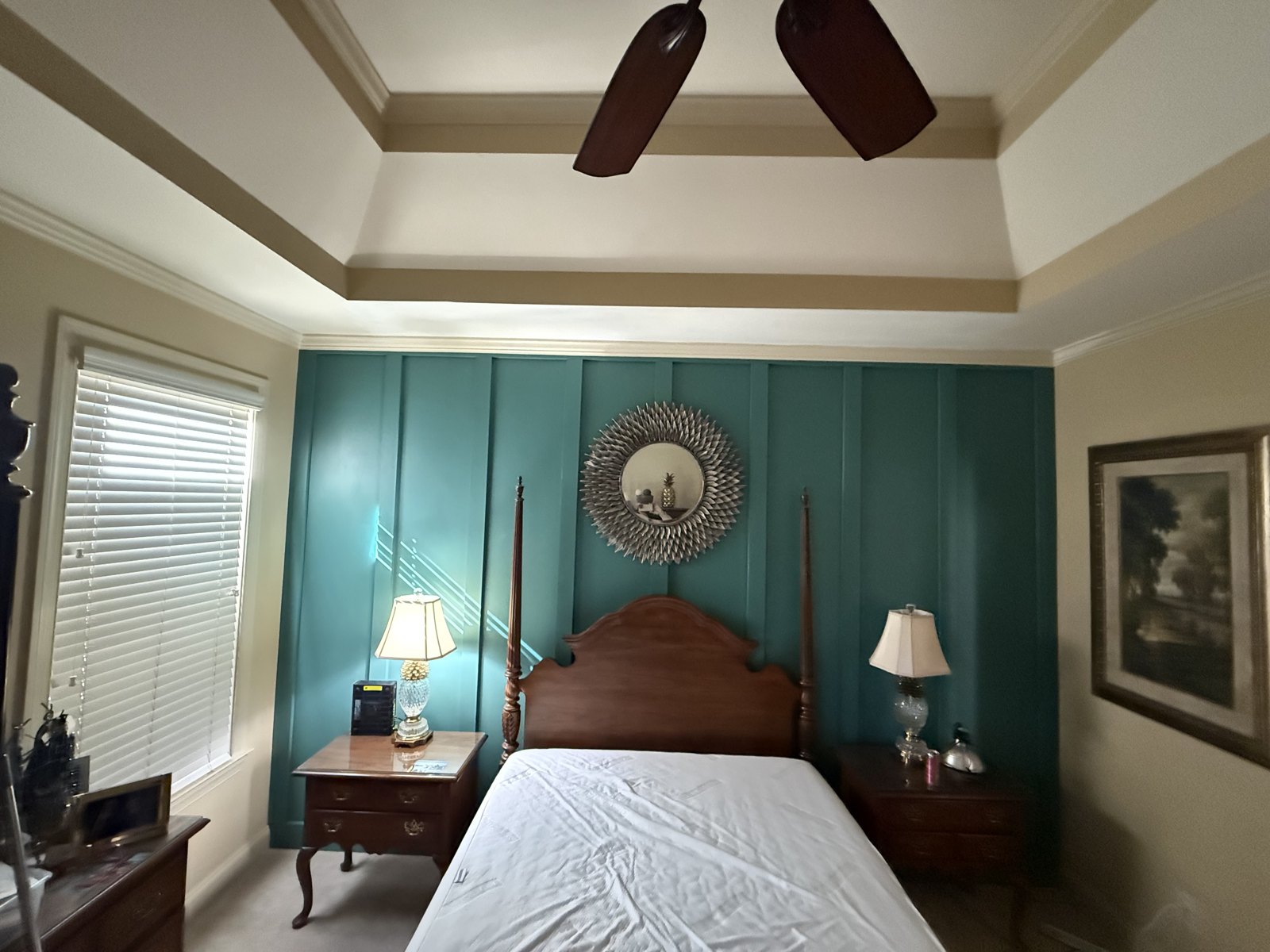
Unfashionable and still correct in two places: bedrooms and stairs. It is warm, it is quiet, and on stairs it is meaningfully safer than a hard surface. Where it is wrong is a basement on slab, where it sits on cool concrete in a humid climate and eventually smells like it.
Prep: the unglamorous part that decides everything
- 1Flatness. Every manufacturer publishes a flatness tolerance, usually measured over a span. Concrete slabs are almost never within it out of the box. That means grinding the high spots and pouring self-leveler in the low ones. This step is where installers cut corners, and it is exactly why cheap floors feel spongy and squeak.
- 2Moisture testing the slab. Before ANY glue-down or floating floor goes over concrete, the slab gets moisture tested. Concrete that reads high will destroy adhesive and can ruin a wood product from underneath, and it will do it months after you paid for the job. This test is quick and it is not optional.
- 3Fix the squeaks while the floor is open. On a wood subfloor, once the old flooring is off, screwing the subfloor down to the joists is fast and cheap. After the new floor is down, it is neither. Do it while you have the chance.
- 4Pick the right underlayment. It handles sound, minor smoothing and, over concrete, the vapor retarder. Do not let the crew grab whatever roll is on the truck.
Transitions, heights and the dishwasher trap
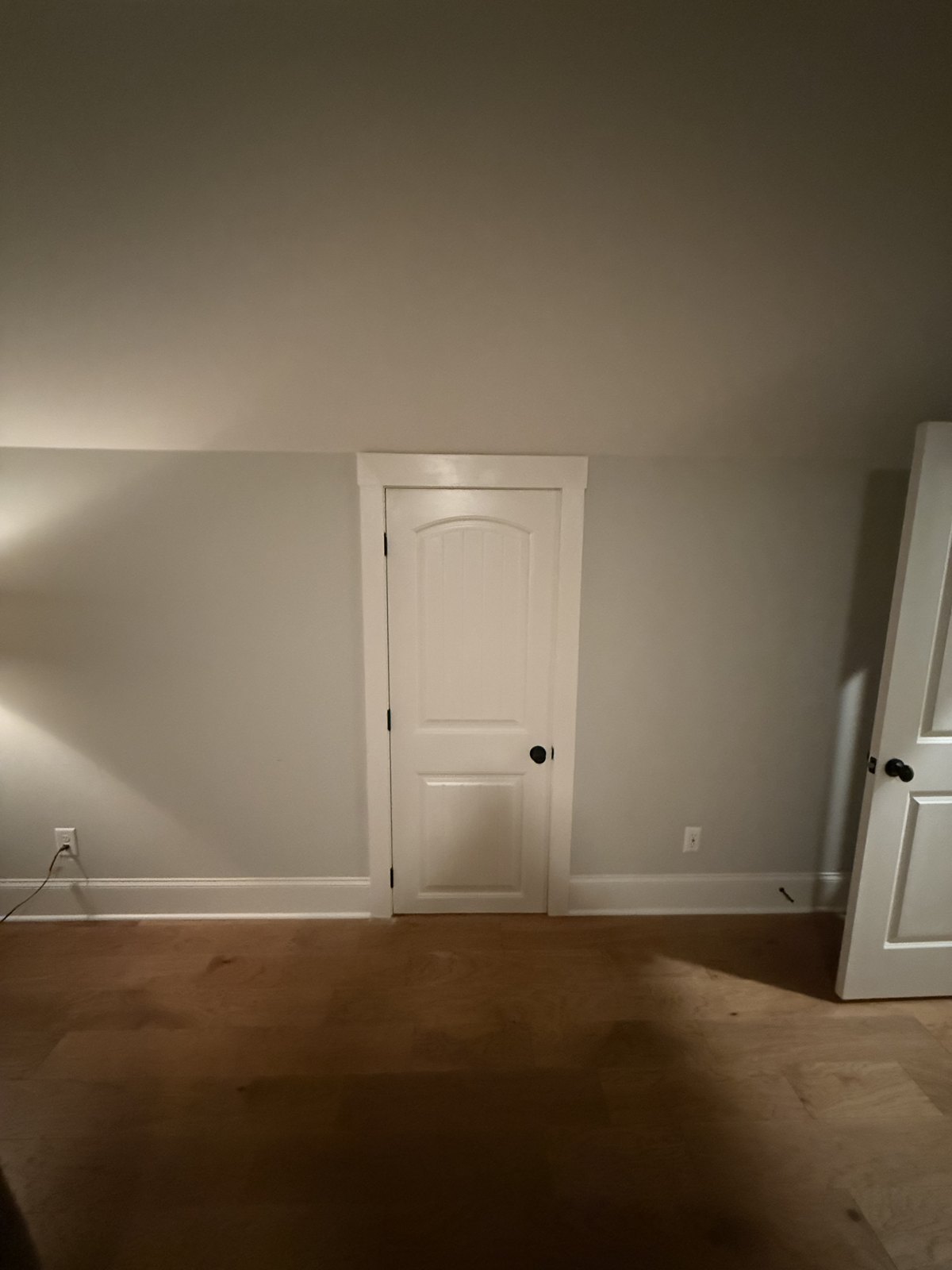
Every time you change materials you change height, and every height change is a transition strip, a trip hazard, or a problem. Plan them. In the kitchen, there is a specific trap that catches people constantly: run the new floor around the dishwasher instead of under it, and the floor is now taller than the opening the dishwasher has to slide out of. The next time it needs service, it does not come out without damaging the floor. Run the flooring under the appliance, or shim the appliance correctly. Decide before install, not during.
Which room gets what
- Kitchen, mudroom, laundry, bathrooms: porcelain tile, or a high-wear-layer LVP if you want warmth underfoot and a single continuous surface.
- Main living areas on a slab: LVP with a real wear layer, or engineered hardwood if you want actual wood.
- Main living areas on a wood subfloor: engineered or solid hardwood, both are on the table.
- Basements: LVP over a properly prepped and moisture-tested slab. Not solid wood, not carpet on slab.
- Bedrooms and stairs: carpet is still a legitimate, comfortable, safe answer.
Get a straight answer about your floor
The right flooring depends on what is under it, and that is something you have to look at, not guess at. Wright Way Services installs flooring throughout Newnan and Coweta County, and we will test the slab, tell you honestly what your subfloor needs, and quote the prep along with the product instead of surprising you with it later. Call (770) 301-4638 to set up a walkthrough.
Open 24 hours · Newnan, GA
Want a hand with this one?
Wright Way Services handles it all in one call — plumbing, remodeling, smart home installs and the whole punch list. Serving Newnan, Coweta County and the surrounding area.