Almost every catastrophic water loss we get called out to has the same shape. It wasn't a big leak. It was a small leak with a long head start.
A braided supply line to an icemaker lets go at 9 a.m. You're at work in Peachtree City. You walk in the door at 6 p.m. That's nine hours of a pressurized water line running into your kitchen floor, down through the subfloor, and into whatever is under it. Same failure caught in nine minutes is a towel and a shutoff valve. Same failure, two completely different events, and the only variable is time.
That's the entire argument for leak detection. You are not buying a device. You are buying a shorter clock.
Tier one: puck sensors (they alert, they don't stop it)
Spot sensors — pucks — are cheap, battery-powered, wireless, and about the size of a hockey puck. You set them on the floor where water would show up first. When the contacts get wet, they scream and they push a notification to your phone.
Be clear about what they do: they tell you. They do not stop the water. That's still enormously valuable, because it collapses nine hours into the time it takes you to drive home or call a neighbor. But if you're going to be gone for a week, a puck is a very well-informed witness to your floor being destroyed.
Where to put them — this is the checklist we walk with homeowners:
- In the drain pan under the water heater. The single most common one. Tanks fail from the bottom.
- Behind the washing machine. Supply hoses and the drain standpipe both fail here.
- Under every sink — kitchen, every bathroom vanity, the laundry sink. Angle stops, supply lines, and P-traps all live in cabinets you never open.
- At the dishwasher toe kick. A dishwasher leak hides under the unit and wicks into the cabinet run before it ever shows on the floor.
- Next to the sump pump, if you have one.
- At the HVAC air handler condensate drain pan. Read that one twice.
- Near the refrigerator icemaker line, if you can reach behind it.
- At the water main / pressure regulator, and anywhere a supply line runs through a finished ceiling.
Tier two: automatic shutoff valves (the one that actually prevents the loss)
This is the real product. An automatic shutoff valve installs on your main water line after the meter. It's a motorized ball valve with a controller. When a paired sensor trips — or when the device itself detects an abnormal continuous-flow pattern, like water running for 40 straight minutes at 3 a.m. — it closes the valve and shuts the whole house down.
That's the difference between a notification and a save. The house shuts itself off whether you're home, at work, or in another state.
Some of these devices also do flow monitoring — they learn your household's normal usage over time and flag anomalies. A toilet flapper that's been running for a week. An irrigation zone with a cracked line quietly watering the same three square feet. A pinhole in a slab line. Those are the leaks that don't flood anything but do show up on your water bill for months before anybody figures out why.
What installing one actually involves
Homeowners are usually surprised this isn't a plug-in gadget. Here's the real scope:
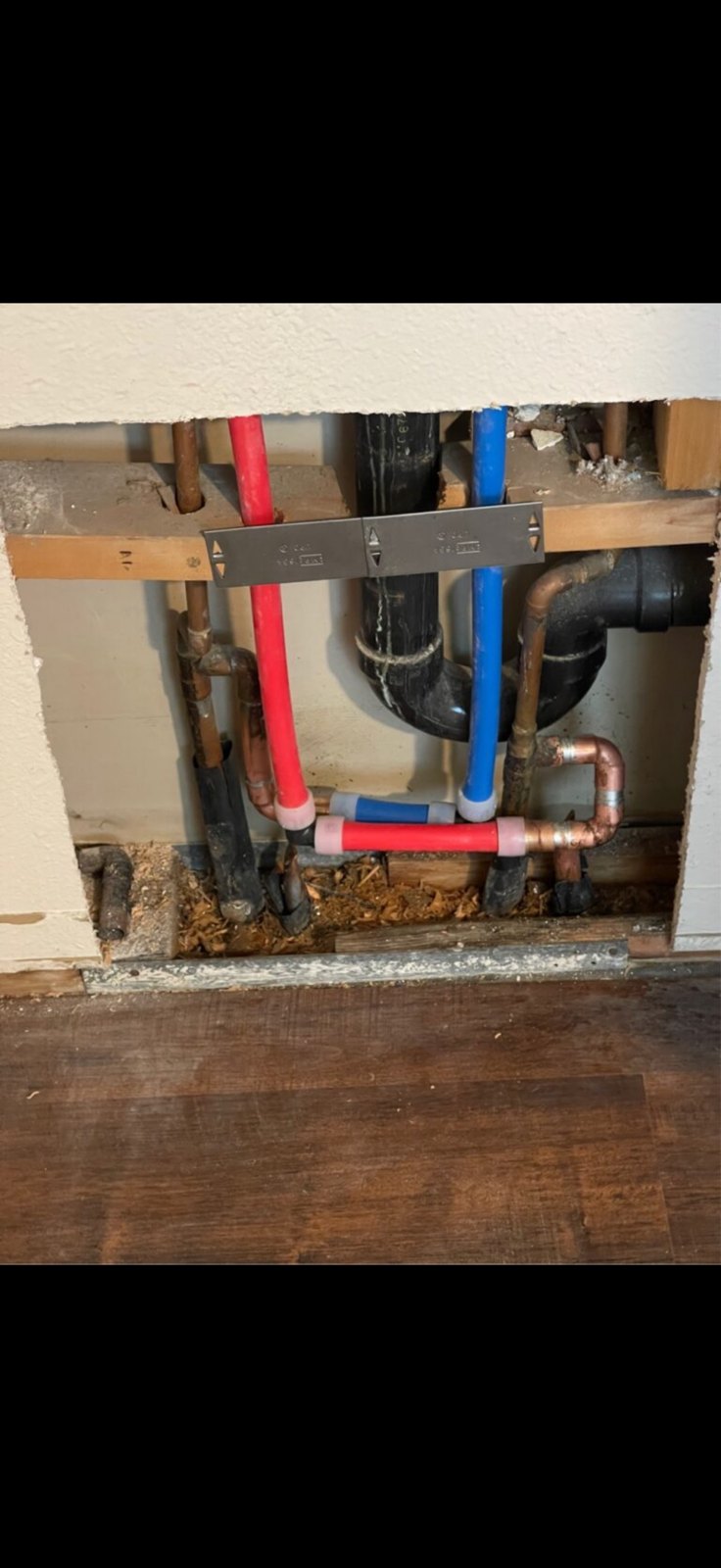
- 1Cutting into the main. The valve goes on the main supply line after the meter, typically ahead of the branch to irrigation if you want the house protected without killing the sprinklers. That's a plumbing job: water off, pipe cut, fittings, valve, pressure test.
- 2Power at the valve. Most units need an outlet nearby. If there isn't one, that's an added item, and it needs to be a proper receptacle — not an extension cord run across a crawlspace.
- 3Reliable Wi-Fi at the install point. This is the part people don't plan for. Your main shutoff is usually in a crawlspace, a garage, a basement corner, or an exterior wall — which is precisely where the Wi-Fi from the router in your living room is at its absolute worst. If the device can't hold a connection, you own an expensive manual valve.
So before we install one, we check signal at the actual valve location. If it's weak, the fix is a mesh node or a wired access point nearby, and it's better to know that on day one than after the drywall's back up.
Failure modes, and why you test
Any device that protects you silently for years is a device you will forget about. Two things kill leak detection:
- Dead batteries. Most pucks last a long time and will warn you — but only if the app is installed on a phone you still own and notifications aren't muted. Check the battery status in the app a couple of times a year.
- Wi-Fi and account drift. New router, new password, an app that got logged out, a hub that quietly dropped offline. The sensor is still sitting there. It just has nobody to call.
Test them. Touch a wet finger or a damp paper towel to the contacts on a sensor and confirm your phone actually buzzes. Do it when you change your smoke detector batteries. It takes two minutes and it's the only way to know the system is alive.
One more thing: talk to your insurer
Some insurance carriers offer a premium credit for homes with an automatic water shutoff device, and some will ask about it at renewal. We're not going to quote you a number, because it varies by carrier, policy, and device. Ask your insurer directly before you buy — tell them the specific device you're considering and ask whether it qualifies and what documentation they want. Worst case they say no and you still have the protection.
Ready to shorten the clock?
We install leak sensors, condensate pan sensors, and whole-home automatic shutoff valves throughout Newnan and Coweta County — including the plumbing work at the main and the Wi-Fi coverage it takes to make the thing reliable in a crawlspace. Book Wright Way Services at (770) 301-4638 and we'll walk your house and tell you exactly where the water is going to show up first.
Open 24 hours · Newnan, GA
Want a hand with this one?
Wright Way Services handles it all in one call — plumbing, remodeling, smart home installs and the whole punch list. Serving Newnan, Coweta County and the surrounding area.