
Replacing a single ceiling fixture with a set of recessed lights is the quickest way to make a room feel bigger and newer. It is also easy to do badly. The standard mistake is a grid of cans centred in the room, evenly spaced, which lights the floor in the middle and leaves the walls, the counters and the furniture in shadow. Here is how we lay them out and what the install involves.
Start with what needs light
Recessed lights point down. Whatever is under them gets lit; whatever is not stays dim. So the layout starts with the things you want lit, not with the room's centre.
- Kitchens: lights over the counters and the island, positioned so you are not standing in your own shadow. That usually means the cans sit over the front edge of the counter, about two feet from the wall, not in the middle of the walkway.
- Living rooms: wash the walls and light the seating area. Cans about two to three feet off the walls make the room feel wider. A dark centre with lit edges reads bigger than the reverse.
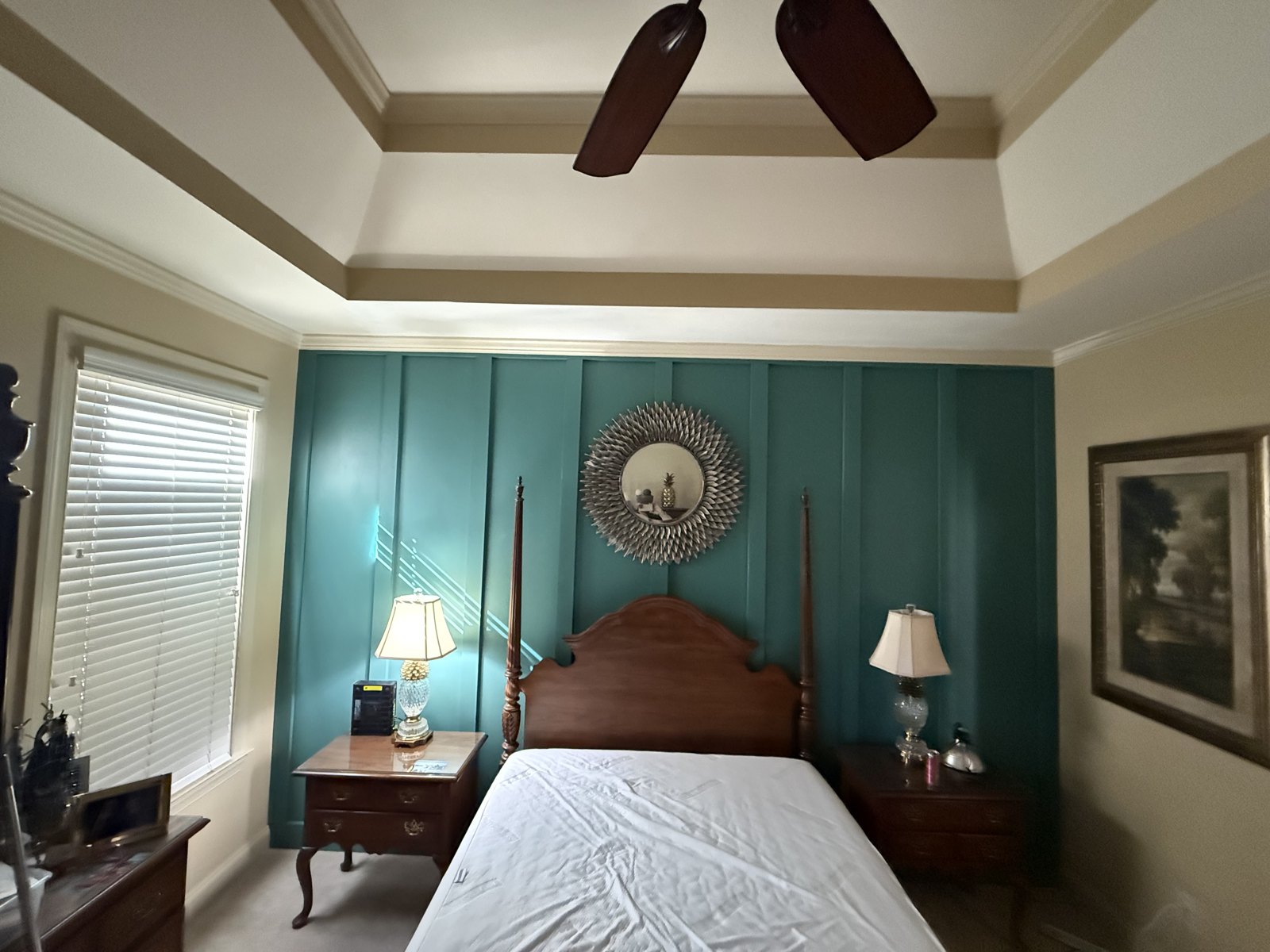
- Bedrooms: keep them out of the direct sightline from the bed. Around the perimeter, on a dimmer.
- Hallways: a single row, spaced evenly, is fine here.
- Bathrooms: one over the shower in a wet-rated trim, and lights at the vanity that do not sit directly over the person's head, which puts the face in shadow. Sconces beside the mirror do that job better.
Spacing
A common rule is to space the lights about half the ceiling height apart: roughly four feet on centre for an 8-foot ceiling, four and a half for 9 feet. Keep the outer row about half that distance from the walls. That is a starting point, not a law; the things you are lighting decide the final positions, and joist locations move a few by a couple of inches.
Four-inch fixtures with a tighter spacing give a more even wash than fewer six-inch fixtures far apart. In a modern kitchen or living room we mostly use four-inch now.
Canless LED vs housings
- Canless LED wafers. Thin fixtures with a small junction box that clip into a hole in the drywall. No housing, so they fit shallow ceilings and under attic insulation without clearance concerns. They are what most retrofits use now. The LED is integrated, so when it fails in ten or more years, the whole fixture is replaced, which is quick.
- Housings with trims. A metal can in the ceiling with a separate bulb or LED module. More parts, more depth, and the traditional way. Useful for specialised trims and adjustable fixtures.
- Retrofit kits. LED modules that screw into an existing older can. The right move if the ceiling already has cans and you just want them LED and dimmable.
Colour temperature and brightness
Warm white around 2700 to 3000K for living spaces and bedrooms. Some people prefer slightly cooler in a kitchen or a bathroom. Many wafer lights have a selectable switch on the back so the temperature can be set at install and changed later. Match the under-cabinet lighting and any pendants so the kitchen is one colour, not three.
What a retrofit involves
In a finished room with an attic above, a set of wafer lights is a day's work: mark the layout, check for joists and obstructions, cut the holes, run cable from fixture to fixture and back to the switch, connect, and install a dimmer. Ceilings with a floor above, or a vaulted ceiling with no attic, take more fishing and sometimes a small access opening, which we patch. The existing fixture's switch loop is usually the starting point for power, and the old fixture location gets a patch or a new fixture.
If the ceiling has blown-in insulation, wafers with sealed boxes rated for insulation contact keep things simple and keep the attic air where it belongs. Our attic insulation post covers why that seal matters in a Georgia house.
Questions we get
How many lights does my kitchen need?
Enough to light every counter and the island without shadows, and usually fewer than people first draw. We lay it out on the ceiling with tape before cutting.
Can they be smart?
Yes. A smart dimmer in the wall is the reliable way. Smart bulbs do not apply to wafers with integrated LEDs.
Is this a permit job?
Extending an existing lighting circuit to more fixtures in the same room is routine lighting work. New circuits from the panel are a different job and need an electrician and a permit.
Light the room properly
Wright Way Services designs and installs recessed lighting across Newnan, Peachtree City, Sharpsburg, Senoia, Tyrone and Fayetteville. Call (770) 301-4638.
Open 24 hours · Newnan, GA
Want a hand with this one?
Wright Way Services handles it all in one call — plumbing, remodeling, smart home installs and the whole punch list. Serving Newnan, Coweta County and the surrounding area.